
3.63 Human errors “To err is human” the need for Check Sheets
Human errors and omissions will effect health and safety planning and performance.
Focusing on human error as a cause when carrying out a root cause analysis can be a valuable approach to understanding the underlying factors contributing to incidents.
Human error includes the Omissions by Management in the design and operation of plant, in other words it is a human error by management to omit policy and procedures that are not adequate!

Human error is indeed a significant factor in many incidents across various industries, and addressing it can lead to effective preventive measures. Here are some considerations:
- Human Error as a Contributing Factor: Human error is often a contributing factor in incidents, whether it’s due to mistakes, lapses in judgment, lack of situational awareness, or other factors. Understanding the specifics of these errors can help identify patterns and trends, which can then inform the development of targeted interventions.
- Systemic Factors: systemic issues — an important EHS concept where system design often enables or prevents error. human error is often the visible manifestation of a problem, it’s crucial to recognize that there are often systemic factors that contribute to those errors. These factors could include inadequate training, unclear procedures, poor communication, lack of supervision, high workload, fatigue, Stress and so on. Focusing solely on individual blame can overlook these broader issues.
- Blame-Free Culture: Encouraging a blame-free culture is essential to getting accurate information during a root cause analysis. If individuals fear retribution for admitting their mistakes, they may be less likely to share crucial information about the context and circumstances that led to the incident. By understanding the factors that contributed to the human error, you can implement measures to reduce the likelihood of similar errors in the future.
- Human Factors Engineering: This field focuses on designing systems, processes, and equipment to take into account human capabilities and limitations. Applying human factors principles can help create environments that reduce the risk of human errors by making tasks more intuitive, reducing cognitive load, and improving overall system performance.
- Training and Competency: While human error is a factor, investing in comprehensive training and competency development is crucial. Proper training can help individuals understand their roles and responsibilities, familiarize them with procedures, and equip them with the skills needed to perform tasks safely and effectively.
- Root Cause Analysis: When conducting a root cause analysis, it’s beneficial to adopt a systematic approach that considers multiple factors, including human error, equipment failures, organizational factors, and environmental conditions. By looking at the entire system, you can identify both immediate causes and underlying systemic issues that need addressing and the consequences of a human error.
Most incidents are not caused by people deliberately doing the wrong thing. They occur because normal people make normal mistakes in imperfect systems.
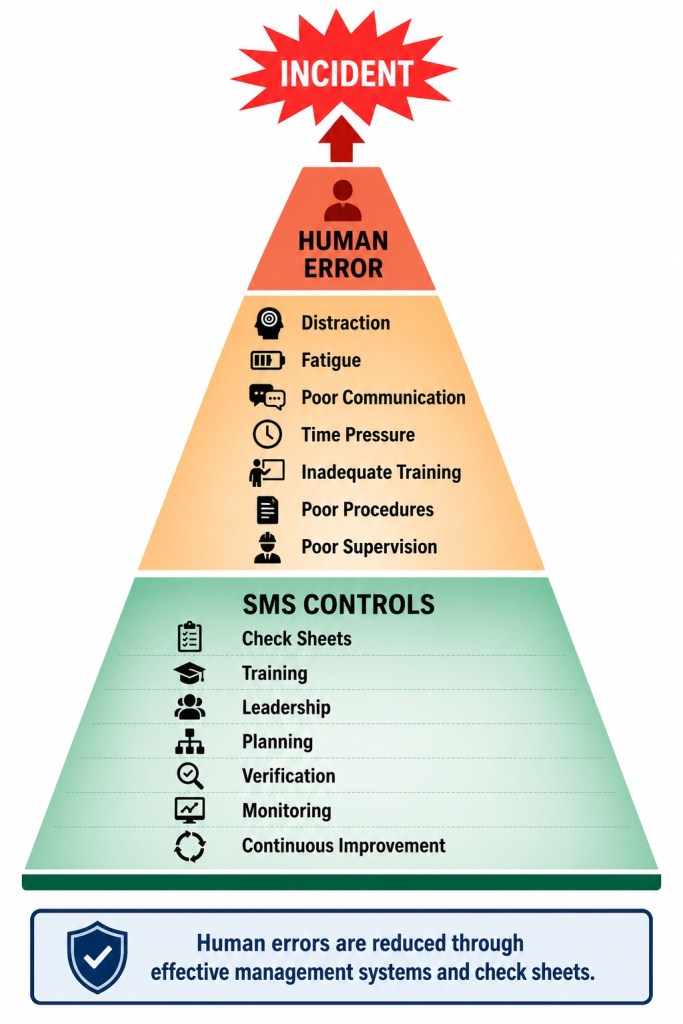
When investigating incidents, it’s crucial to adopt a holistic approach that considers the entire system and the interactions between different elements, including human operators, procedures, equipment, and the environment. This approach is known as a systems thinking approach.
Example;- I recall an incident on a double block and bleed on a pipeline pig launcher, the procedure said open the vent needle valve but did not emphasize that the vent valve was to stay open, as an operator you usually leave the vent valve in the position you found it i.e in this case closed, as a result condensate gas pressure built up in side the pig launcher only to a few psi but sufficient to blow the 24 inch pig access door open.
Comment – The check sheet should have clearly stated “leave the vent valve open”, as a result the operator was suspended but reinstated when it was explained that this was a human factor like using a door which is usually closed after going through and should have been emphasized on the check sheet to “leave the Vent valve open”.

Our challenge in H&S is how to we get the right information to the supervisors and workers on the job and ensure safe working procedures are being followed. Every day ask yourself why and how we do things, there is always a safer and better way? Well laid out and planned check Lists deliver the necessary H&S information directly to the worksite in a concise, understandable and practical format.
Signs only demonstrate that you are aware of the hazard.

Check Lists summarize essential planning and control measures relevant to a specific tasks
- Summarize Companies policy and procedure for that activity
- Risk register will identify Hazards and list relevant safety control measures
- M/C Operating, isolation and guarding instructions
- Mandatory PPE to be worn
- Safety equipment to be on site
- Additional site-specific notes like what to do in an emergency
- Reporting Relationships – Supervisor key link
- Be aware of invisible hazards like dust and noise
- Factor in the weather.
Advantages of creating check lists for activities and programs of work are ;-
- Aid pre task planning
- Check to ensure program controls are in place and up to date.
- Identify equipment list and spares.
- Reminder of the safety requirements of the task
- Attached to the PTW
- Standardize the check list format
- Use an agenda for toolbox meetings
- Capture experiences from previous tasks
- Used by the FSO or supervisor for worksite monitoring of Health and Safety performance
- Form part of the official admin worksite documents, to be indexed, dated and regularly updated. Check list is a live worksite control document.
- It is recommended that a std. format und symbols like ISO are used so that staff are familiar with the symbols.
- Add site inspection requirements and operator manuals

A call to action, I encourage organizations to integrate checklist use into their EHS Management Systems.
Why Check Sheets Work? – Check sheets help people to :
- Remember critical steps
- Verify important controls
- Improve communication
- Reduce assumptions
- Create consistency
- Demonstrate due diligence
- Capture learning and improvements
- Can be audited on the job
Even experienced workers can miss steps when distracted, fatigued or under pressure.
Check sheets help prevent important tasks from being overlooked.
Example Check List for St Catharines City – Parks dept.

Fatal Concorde flight – what went wrong
Unfortunately this is a good example of checking the worksite – in this case the runway ! You could argue that it is difficult to check the runway every time a plane takes off but if Concorde was susceptible to damage by wing fuel tank design then checking the runway is clear of objects needs to be on the take off check sheet
Formulae one relies on check sheets