
5.0 Linkedin posts
These LinkedIn posts trace the development of ideas explored throughout BoostingwithAI.com. Each builds on earlier discussions, connecting business opportunitieslike Strategy, Marketing Reach and Health and Safety. AI and the Safety Case approach to continuous improvement.
We know that AI stands for Artificial Intelligence – Artificial is now “Super Intelligence” so what is “intelligence” in this context?
October 2026 – AI – REDUCING COSTS WHILE IMPROVING QUALITY
Why use AI simply to reduce costs when it offers the opportunity to improve quality at the same time?
Consider an accountant as an example;
Traditionally, an accountant spends considerable time examining financial records, checking transactions, preparing reports and identifying discrepancies.
AI can assist with many of these activities, reducing the time and cost involved.
But reducing costs is only half the opportunity.
What if the accountant used the time saved to provide clients with a better service?
AI could help the accountant:
Identify emerging financial risks and opportunities.
Compare business performance against previous years.
Highlight opportunities to improve profitability.
Develop financial forecasts and alternative scenarios.
Provide more frequent, meaningful advice to clients.
The accountant continues to apply professional expertise, verify the information and exercise judgment.
The outcome?
A potentially lower-cost service that offers greater value to the customer.
And perhaps, most importantly, the opportunity to provide services that were previously too expensive or time-consuming to offer.
This principle applies well beyond accountancy — to engineering, marketing, business strategy, health and safety, and many other professions.
The intelligent question to ask AI is not simply:
“How can I reduce my costs?”
It is:
“How can I use AI to reduce my costs, improve the quality of my service, and identify additional opportunities for my customers?”
That is what I mean by Using AI’s Intelligence Intelligently.
The objective is not simply greater efficiency. It is achieving a better outcome.
Do the optimum, not merely the minimum.
Explore more at https://boostingwithai.com

What is intelligence in the context of your business? https://boostingwithai.com
4th Oct 2026 – RELAUNCHING BOOSTINGWITHAI.COM -FINDING YOUR BUSINESS OPPORTUNITIES
1st Oct 2026 – WHAT DO WE MEAN BY INTELLIGENCE?
The Oxford Dictionary describes intelligence as “the ability to learn, understand and think in a logical way.”
That definition made me think about the Safety Case — and the increasing role that Artificial Intelligence can play in supporting it.
A Safety Case should never simply be a document that says:
“We complied with the requirements.”
It should provide a reasoned, evidence-based demonstration that an operation, system or organization is fit for purpose and that risks are being effectively managed.
But circumstances change;
Equipment ages.
People change.
Technology develops.
New hazards emerge.
Incidents and near misses provide new evidence.
So shouldn’t an intelligent safety system learn as well?
That is where AI has considerable potential.

AI can help us examine larger quantities of information, identify patterns and emerging trends, question assumptions, compare actual performance with expectations and highlight where further human attention may be required.
This creates a powerful continuous-improvement cycle:
Observe → Learn → Understand → Reason → Improve → Verify → Repeat
There is an important qualification.
Learning does not automatically mean improving.
Poor information can produce poor conclusions. AI therefore does not remove the need for professional judgement, verification, challenge and accountability.
Instead, it can strengthen our ability to continually ask:
What has changed?
What have we learned?
Are our assumptions still valid?
Can we make this safer?
Can we demonstrate that the improvement actually works?
Perhaps this is where Artificial Intelligence and Safety Case methodology naturally come together.
The Safety Case provides the framework for demonstrating that something is fit for purpose.
AI can help provide the intelligence to keep questioning, learning and improving that demonstration as conditions change.
Intelligence is not only the ability to learn. It is the ability to use what is learned to continually improve — and to demonstrate through evidence that the improvement works.
That is the difference between treating safety as a requirement to be met and treating safety as a continuing journey of improvement.
Do the optimum, not simply the minimum.
24th Sept 2026 – SHOULD OUR HIGHWAYS HAVE A SAFETY CASE?

We regulate workplaces because people have a right to expect reasonable protection while earning a living. But what about the journey to work?
In Canada, particularly outside our major cities, travelling by road is often a practical necessity. We use highways to get to work, conduct business, deliver goods, provide services, visit family and enjoy our leisure time.
The graph above raises an important question.
Over the five years 2020–2024, Ontario recorded 2,972 road fatalities. Over the same years, Ontario Ministry of Labour data recorded 276 workplace fatalities under the categories included in its OHSA fatality dataset.
These statistics are defined differently and should not be treated as a direct like-for-like comparison. But the scale of road fatalities surely justifies asking:
Why shouldn’t we manage our major highways using the same systematic safety principles that we expect from workplaces and other safety-critical systems?
Imagine a Highway Safety Case.
Instead of relying primarily on individual rules and enforcement, the organizations responsible for a highway would continuously demonstrate that risks are being identified, monitored and reduced as far as reasonably practicable.
That could mean:
• better analysis of collisions, near misses and recurring high-risk locations
• speed management based on actual risk
• safer road design and physical barriers
• improved monitoring of weather, traffic and changing conditions
• management of driver fatigue
• adequate, clean and civilized rest areas and toilets at sensible intervals
• better emergency response arrangements
• continuous learning from incidents across Canada and internationally
• AI identifying patterns and emerging hazards before another serious incident occurs
• independent review of whether the highway remains fit for purpose
The principle is straightforward:
People should be reasonably protected when travelling to work, while at work and when travelling for recreation.
It also strengthens the case for alternatives to road travel.
GO rail, for example, provides an alternative to driving on the QEW. A proposed Lake Ontario hovercraft service could provide another. Any claim that one mode is safer than another should, of course, be demonstrated with comparable evidence and a proper risk assessment.
Perhaps we should stop thinking about highways simply as roads.
They are major pieces of safety-critical infrastructure used by millions of people.
If a factory, railway, aircraft, offshore installation or major project deserves systematic risk management, why shouldn’t a highway?
Maybe it is time to consider a Safety Case for our highways — not simply asking whether the rules have been followed, but whether the whole system is demonstrably fit for purpose.
All year Transport to Niagara will be safer by hovercraft A Highway Safety Case could look at the whole system — road design, speed, weather, congestion, rest areas, human factors, emergency response and accident history — and continually ask: are we doing the optimum to keep people safe, rather than simply meeting the minimum?

The future for Health and safety will be the “Safety Case” methodology
There is considerable concern today about the speed at which AI is developing.

But perhaps we have been here before!
Think about the sailing ship. It was an extraordinarily sophisticated technology for its time — sails, ropes, pulleys, navigation, weather knowledge and skilled crews working together.
Ships enabled exploration, international trade and the discovery of new opportunities. They also brought risks and were used for purposes that did not always benefit humanity.
But we didn’t stop developing ships. We learned. We adapted. We improved the technology.
Sail gave way to steam.
Wood gave way to iron and steel.
Navigation evolved from stars and charts to radar, satellites and GPS.
Today, ships use automation, sophisticated sensors and increasingly AI.
The ship remained. The technology surrounding it evolved.
I believe we should look at AI in much the same way.
AI itself will evolve. It will combine with robotics, new materials, sensors, energy systems and technologies we may not yet have imagined. The important question therefore isn’t simply:
“How fast is AI developing?”
Perhaps the better question is:
“How do we manage that development so humans and the planet benefit?”
History suggests that technological progress is rarely a straight or risk-free journey. We learn from experience, introduce safeguards, improve standards and change course when necessary.
The objective should not be to fear the wind or stop the ship.
It should be to learn how to navigate.

🇨🇦 🇺🇸 WHAT IF WE DISCUSSED THE OPPORTUNITIES — NOT JUST THE BORDER?
We need to discusse the opportunities that could come from a much closer union between Canada and the United States. Surely an idea of this magnitude deserves an open discussion based on opportunities, consequences and evidence, rather than being ring-fenced by existing political positions.
What could much deeper integration potentially offer?
• A North American economic powerhouse operating increasingly as one market
• Freer movement of people, skills and employment across the border
• Greater opportunities for Canadian youth
• More integrated defence and security
• Stronger educational and research partnerships
• Revitalized cross-border tourism
• Joint development of AI and emerging technologies
• Greater cooperation on energy, infrastructure and environmental challenges
• Canadian/USA representation and influence within a much larger political and economic structure
Right now, Canada and the United States are engaged in another damaging tariff confrontation. Two countries with one of the world’s closest economic relationships are putting additional barriers between themselves when perhaps we should also be asking what could be achieved by removing barriers.
“What opportunities are we giving up by refusing even to discuss and seriously examine Opportunities for our sustainability and youth”

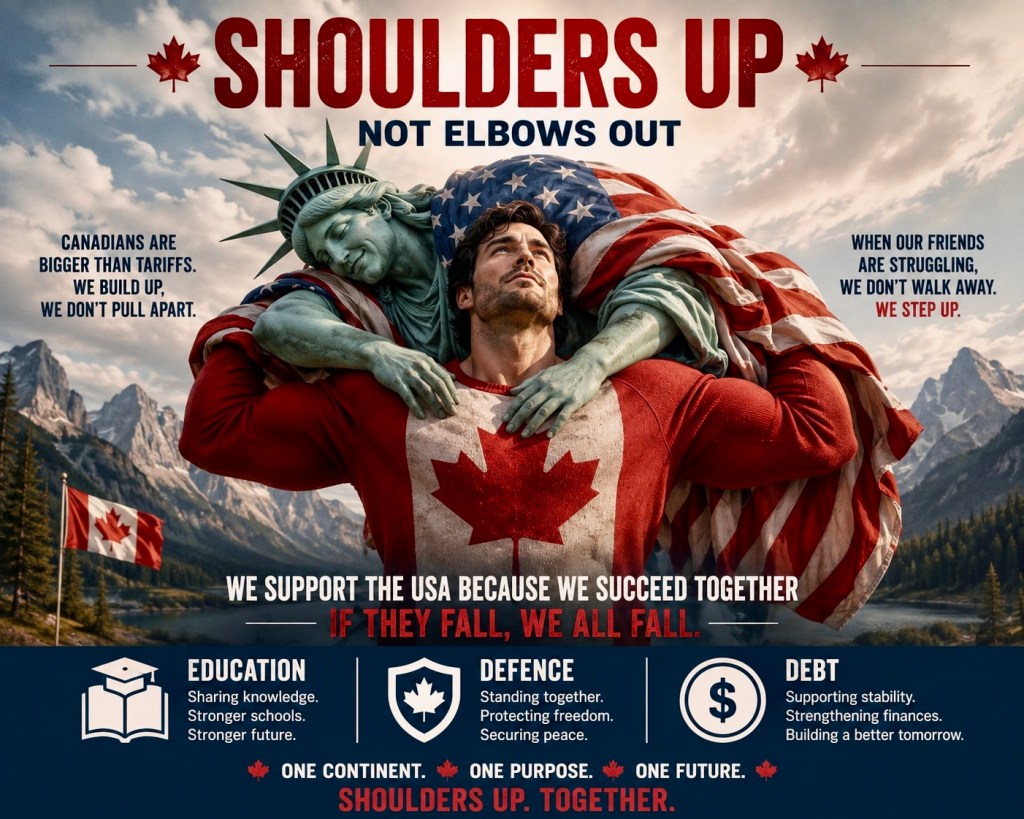
Canada needs to broadcast its engineering achievements like the Gordie Howe International bridge, St Lawrence Seaway which connects the Atlantic with the Great Lakes, CN Tower, world class airports and the many sustainable energy hydro projects? Planned soon is the all year hovercraft by Hoverlink across Lake Ontario from Toronto to Niagara these State of the art Hovercrafts to be built in Canada. Yes let’s shout out Canadas achievements from the rooftops to the rest of the world after all Canada is the second largest country in the world by area and yes we Canadians are good at what we do, we just do not shout out about it – maybe we should!


The Most Powerful AI Prompt Isn’t a Prompt at All… It’s Your Chat History
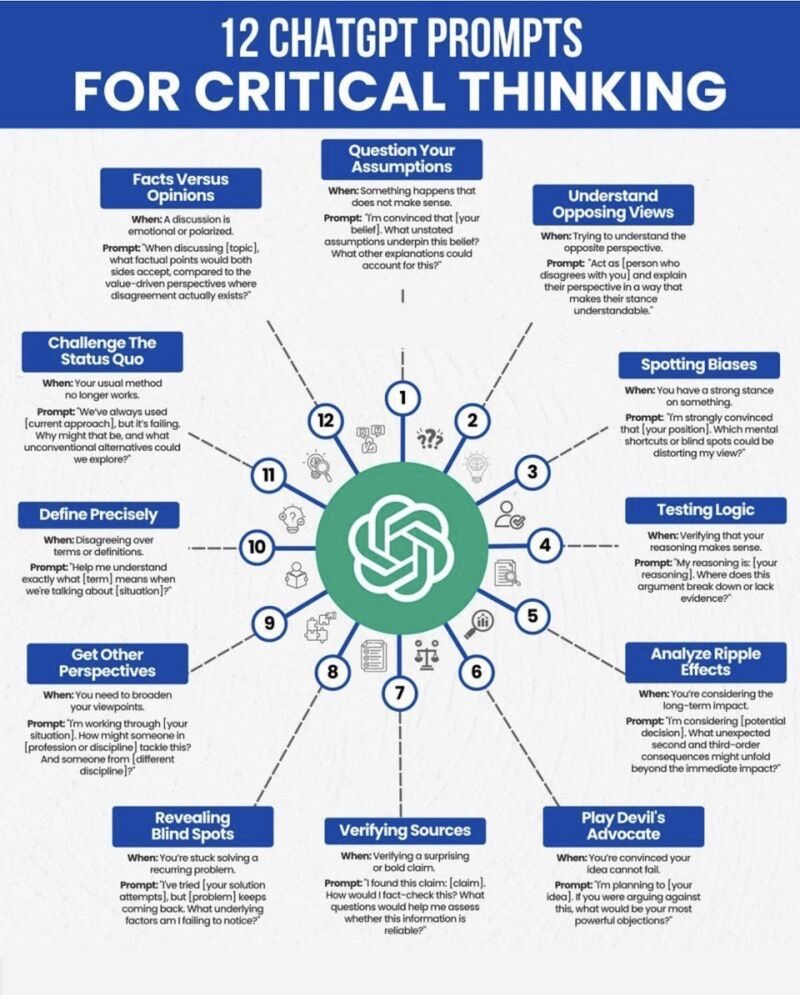
Every day I see posts like this: “12 ChatGPT Prompts for Critical Thinking.” They are useful but miss one of the biggest advantages of using AI effectively by missing out “Context”.
Many people open ChatGPT, ask one question, copy the answer and then start a completely new chat the next day.
It’s a bit like walking into a meeting every morning and introducing yourself again.
Imagine saying to a colleague:
“Forget everything we discussed yesterday. Let’s start again.”
That’s how many people use AI.
The real value of maintaining a relevant chat history is when
AI begins to understand:
-the problem you’re trying to solve,
-the terminology you use,
-what you’ve already explored,
-what you’ve rejected,
-and where you’re trying to go.
Instead of repeatedly explaining your project, you spend more time improving it.
A good prompt is valuable. – A good conversation with context is even more valuable.
The most powerful use of AI isn’t asking isolated questions.
It’s building knowledge together through accumulated chats over time.
After all, how can AI help develop an idea if every conversation starts from a blank chat/page ? Boostingwithai.com
WHY WAIT FOR REGULATION TO BUILD A STRONGER SAFETY CASE?
A Safety Case enables an organisation to demonstrate that its operations are fit for purpose—not merely compliant.
It brings fragmented safety information together to show:
• The hazards that have been identified
• The possible consequences, including cascading events
• The controls and barriers in place
• How those controls are verified
• How the organisation is prepared for emergencies
• How lessons and changing conditions are incorporated
Organisations do not need to wait for regulation to benefit.
A well-maintained Safety Case can strengthen due diligence, regulatory confidence, operational reliability, workforce communication and business resilience.
AI now makes this approach far more practical. It can help review inspection reports, maintenance records, procedures, audits and previous incidents—identifying patterns, omissions and opportunities that might otherwise remain hidden.
AI supports professional judgement and helps keep the Safety Case current as a living management document.
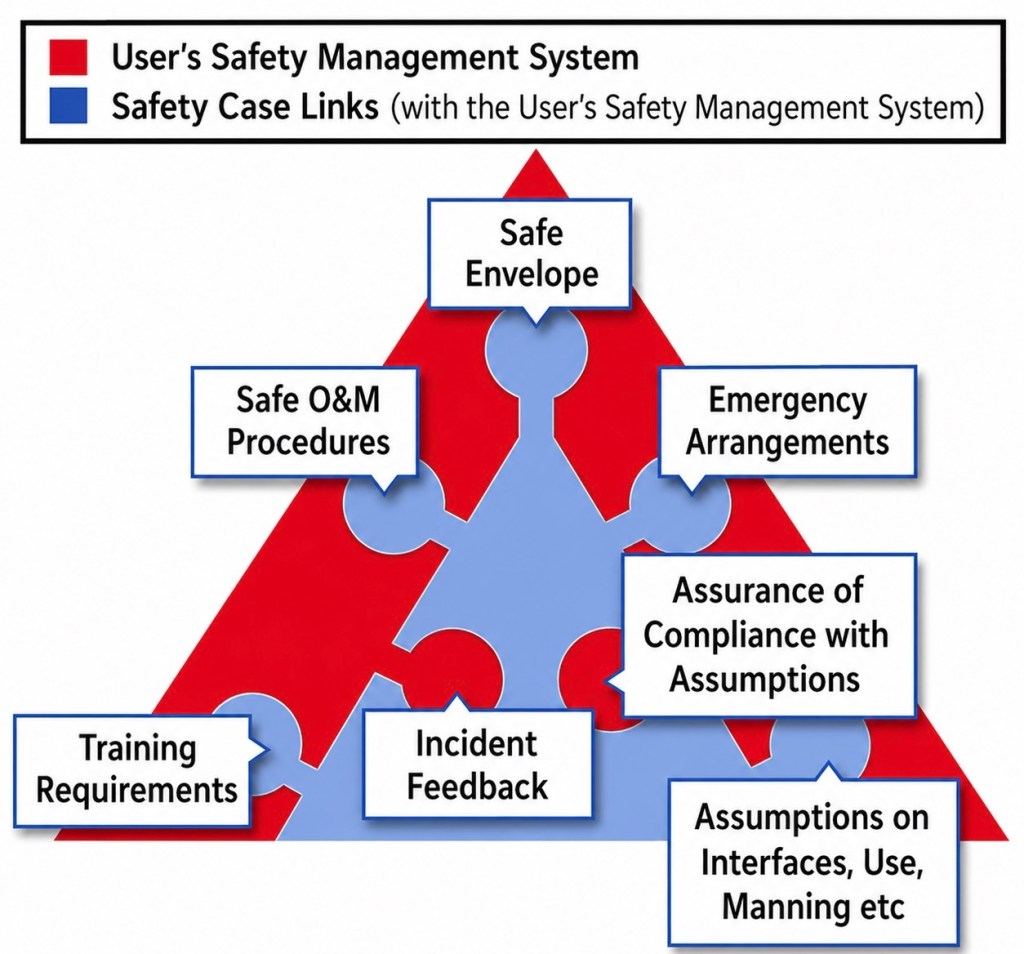
View the new flipbook and consider what a Safety Case could contribute to your organisation:
NEPAL- This flooding disaster remind us that extreme weather, infrastructure failure and cascading consequences must be anticipated—not simply reacted to.
A “Safety Case” brings hazards, consequences, barriers, emergency response and changing conditions together into one Regulated process by detailing a comprehensive “Safety case”!
AI now makes reviewing scenarios and learning from past events faster and more practical.
For high-consequence hazards, we should move beyond minimum compliance and demonstrate that risks are being actively managed.
Do the optimum, not simply the minimum
Governments need to do more to regulate the “Safety Case” approach
The Portage Path

Sometimes, the path changes. The destination doesn’t.
A portager carries a canoe over land when the water can no longer take them forward.
The river may be blocked by rapids, waterfalls, shallow water or obstacles. The journey doesn’t necessarily end. The portager simply recognizes that the current is no longer the way forward.
So they pick up what matters, carry it across unfamiliar ground, and keep moving until they reach navigable water again.
That idea has stayed with me.
Because life has its own portages.
There are moments in our careers when the job we expected is no longer there.
Moments when our plans change.
Moments when the skills that got us here are no longer enough to get us where we want to go.
And sometimes, we find ourselves standing at the edge of the water wondering:
“What do I do now?”
The Portager’s Path is a reminder that we don’t always need to abandon the destination simply because the path has become difficult.
Sometimes we need to learn something new.
Sometimes we need guidance.
Sometimes we need to develop a new skill, change direction, rebuild our confidence, or carry our goals through a season of uncertainty.
The effort of the portage may be temporary.
The destination can still be worth pursuing.
That is the idea behind Portager ECCFS — Education, Career Coaching & Financial Services.
To help people develop skills, navigate transitions, build confidence and continue moving forward when the water runs out.
The path may change.
The destination can remain.
Become the portager of your own journey.